On February 9, 2026, Reuters published an investigation that should change how every patient, surgeon, hospital administrator, and lawyer in Ohio thinks about medical malpractice. The headline was blunt: as artificial intelligence enters the operating room, reports are rising of botched surgeries and misidentified body parts. The investigation centered on a single FDA-cleared device, Johnson & Johnson subsidiary Acclarent's TruDi Navigation System, used by ear, nose, and throat surgeons treating chronic sinusitis, and what reporters found was sobering. Since AI was added to the device in 2021, the U.S. Food and Drug Administration has received at least 100 reports of malfunctions and adverse events, with at least 10 documented patient injuries between late 2021 and November 2025. And TruDi is one device. As of July 2025, the FDA's public database listed more than 1,250 AI-enabled medical devices authorized for marketing in the United States, and the agency is now clearing new AI/ML software as a medical device (SaMD) at a pace of roughly one every 31 hours.
This is the new face of medical malpractice. And patients in Cleveland, like patients everywhere, have rights that most lawyers have not yet learned to enforce. At Ryan Injury Attorneys, we are watching this space closely, and we believe it is going to be the most important emerging area of personal injury law in Ohio over the next five years.
What the Reuters Investigation Actually Found
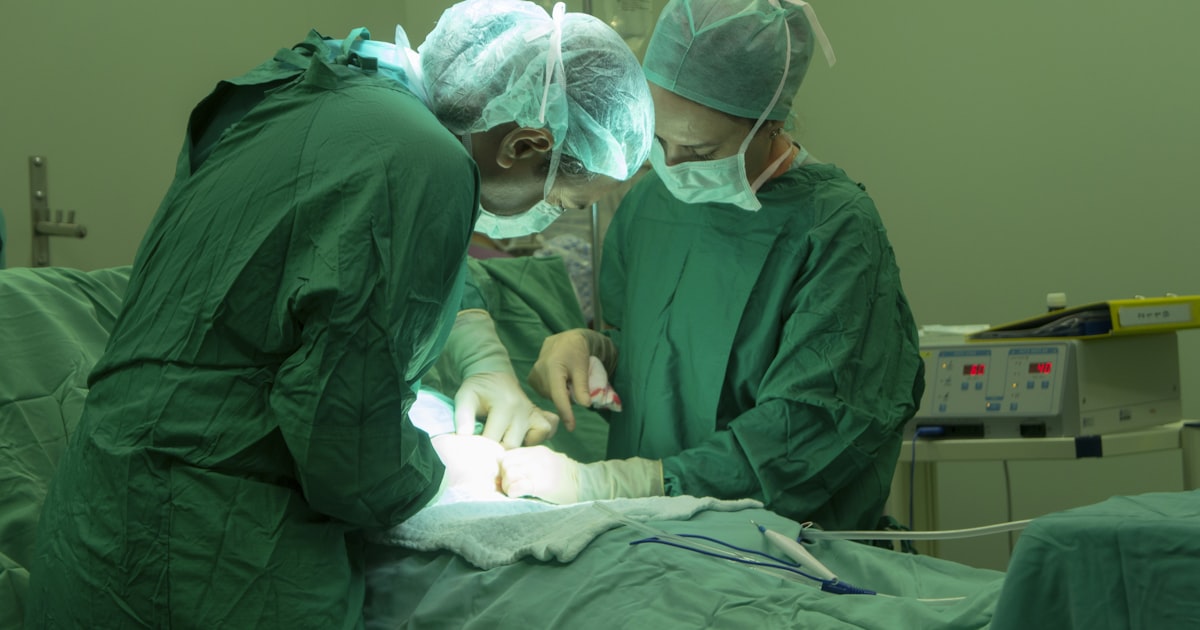
The TruDi system is a navigation tool. It uses an AI-augmented overlay to help surgeons locate sinus anatomy during functional endoscopic sinus surgery, procedures that take place inches from the eyes, the brain, and the carotid artery. When the AI overlay is wrong, the consequences are not minor. Reuters reviewed FDA adverse event databases and identified at least 100 reported malfunctions and at least 10 patient injuries. Reporters and outside surgical safety experts interviewed for the story emphasized two themes: the malfunctions are not isolated to one device, and the FDA reporting system likely captures only a small fraction of what is actually happening in operating rooms.
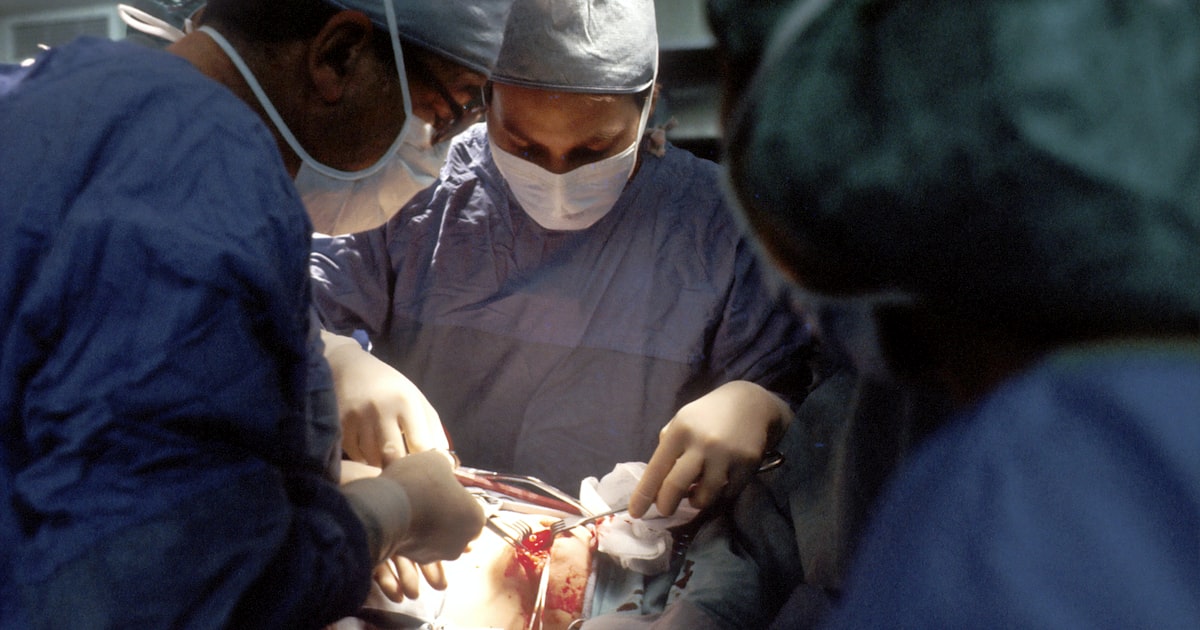
The investigation also flagged failures in AI software designed to highlight anatomical structures during laparoscopic and robotic surgeries, specifically systems intended to identify ureters, bile ducts, and major blood vessels so that surgeons can avoid cutting them. When those AI overlays generated inaccurate guidance, surgeons made incisions or dissections that caused organ perforation, hemorrhage, and the need for additional corrective surgeries. The investigation cited additional FDA reports involving an AI-augmented heart monitor that allegedly overlooked abnormal heartbeats and an AI-augmented ultrasound that misidentified fetal body parts during obstetric scans.
Why AI Medical Malpractice Is Legally Different
Traditional medical malpractice law assumes a human decision-maker. The surgeon is the captain of the ship; the nurse, the technician, and the resident are her crew. When something goes wrong, the chain of causation usually runs back to a person who departed from the standard of care. AI changes that equation in three important ways.
First, AI introduces a non-human decision-maker. When an algorithm identifies the wrong structure as a ureter, the proximate cause of the injury is partly the algorithm, not just the surgeon who relied on it. Ohio courts have not yet meaningfully addressed how to allocate fault between a human physician and the software they trust.
Second, AI is typically a black box. The radiologist or surgeon who sees an AI-generated highlight cannot meaningfully audit how the algorithm reached its conclusion. That makes informed consent murky: did the patient know AI was being used? Did the surgeon understand the algorithm's limitations? Did the hospital validate it against its own patient population?
Third, AI brings new defendants into the courtroom, software vendors, device manufacturers, and the corporations that integrated AI into clinical workflows. These defendants have deeper pockets than individual physicians and very different defenses. Holding them accountable requires a different set of legal tools than a conventional malpractice case.
The Liability Chain: Who Can Be Held Accountable in Ohio
When an AI-assisted procedure harms a patient, several potential defendants come into focus. Identifying them (and the legal theory that fits each) is what separates a successful AI medical malpractice claim from one that collapses under the weight of the defense bar.
The Operating Surgeon
The surgeon who used the AI tool remains a potential defendant under Ohio's traditional medical malpractice framework. The relevant statute is Ohio Revised Code § 2305.113, which establishes a one-year statute of limitations for medical claims, half the period for ordinary personal injury under R.C. § 2305.10, subject to Ohio's discovery rule and the 180-day extension letter authorized by R.C. § 2305.113(B). The four-year statute of repose under R.C. § 2305.113(C) sets an absolute outer limit.
A surgeon's duty in the AI era includes more than just operative skill. It now arguably includes the duty to understand the limitations of the AI tools she is using, to verify AI-generated guidance against her own clinical judgment, and to disclose AI involvement to the patient as part of informed consent. Whether a surgeon meets that evolving standard of care is the question every AI medical malpractice case will turn on.
The Hospital or Health System
The hospital that selected the AI tool, granted privileges to the surgeons using it, and integrated it into operative workflows can be liable under both vicarious liability (for the negligence of its employees) and direct negligence theories (negligent credentialing, negligent procurement, failure to validate the AI against the hospital's own patient population, and failure to train staff on its limitations). These institutional theories are particularly important when the surgeon is judgment-proof or the harm is catastrophic, because hospitals carry far more insurance than individual physicians.
The AI Software Vendor and the Device Manufacturer
This is where AI medical malpractice cases get interesting, and where most lawyers have not yet caught up. When an AI tool gives wrong information that causes injury, the software is, in legal terms, a defective product. Ohio's Product Liability Act, codified at R.C. § 2307.71 through § 2307.80, allows a claim against the manufacturer of a defective product on theories of defective design, defective manufacture, failure to warn, and nonconformance with representations. AI vendors fit squarely within the Act's definition of "manufacturer."
Crucially, a products liability claim is not a medical claim. It does not fall under R.C. § 2305.113's one-year statute. It is governed by the two-year limit of R.C. § 2305.10 and does not require an affidavit of merit from a physician expert. It can be filed against entities with substantial insurance coverage. And it allows discovery into the algorithm's training data, validation studies, and known failure modes, discovery a traditional medical malpractice case rarely reaches.
Hospitals as System Operators
The FDA's 2026 update to its Quality Management System Regulation (QMSR), which became enforceable February 2, 2026, and aligns FDA requirements with international standard ISO 13485, imposes documented process requirements on AI device manufacturers covering software design, maintenance, and change control across the full AI development lifecycle. At the hospital level, the parallel obligation (to validate, monitor, and audit AI tools deployed inside the institution) is increasingly considered part of the standard of care. Hospitals that deploy AI without local validation, without staff training on its limitations, and without a process for monitoring its outputs in clinical use are taking on real legal risk.
How Ohio Statutory Law Applies, Practically
Litigating an AI medical malpractice case in Ohio means navigating overlapping statutes. The choices a lawyer makes at filing dictate everything that follows.
- The one-year medical claim statute (R.C. § 2305.113) requires speed. From the date the patient knew or should have known of the AI-related injury, the clock is one year. A timely 180-day letter under § 2305.113(B) extends that by 180 days for further investigation. Filing the complaint requires an affidavit of merit from a qualified medical expert under Ohio Civil Rule 10(D)(2). Lining up that expert takes weeks, and AI cases require experts who can also speak to the software's limitations.
- The two-year personal injury / products liability statute (R.C. § 2305.10) gives more breathing room and applies to claims against the AI vendor or device manufacturer for a defective product. It does not require an affidavit of merit. It is a different complaint, with different defendants, even though it may arise from the same operative event.
- The wrongful death statute (R.C. § 2125.02) applies if the patient died. Two years from the date of death; specific persons authorized to file; categories of recoverable loss defined by the statute.
- Damage caps (R.C. § 2323.43 for medical claims; R.C. § 2315.18 generally) apply differently depending on which claim is at issue. For medical claims under R.C. § 2323.43, the standard noneconomic damages cap (the greater of $250,000 or three times the economic damages, capped at $350,000 per plaintiff and $500,000 per occurrence) is increased, not eliminated, when the injury involves permanent and substantial physical deformity, loss of a limb, loss of a bodily organ system, or permanent loss of the ability to care for oneself. In that category, the medical-claim cap roughly doubles to $500,000 per plaintiff and $1,000,000 per occurrence. By contrast, the general personal-injury cap under R.C. § 2315.18 (which governs the products liability claim against the AI vendor or device manufacturer) does not apply at all in those catastrophic-injury categories. That makes the products liability path against the AI vendor especially valuable: uncapped noneconomic damages for the most serious AI surgical injuries.
What Patients Should Do If They Suspect AI Caused Their Injury
- Get all your medical records. Ohio R.C. § 3701.74 gives you the right to your own records. Request them in writing from each provider (hospital, surgeon, anesthesia, imaging) and ask specifically whether any AI/CADe/CADx software, machine-learning navigation, or "computer-aided" tool was used in your procedure. The records should disclose this. If they do not, that itself is a problem.
- Write down a timeline. When did symptoms start? When did you seek care? What did each provider say about the AI involvement? Memory fades; contemporaneous notes are gold.
- Do not sign anything from the hospital or its insurer until you have spoken with a lawyer. Hospitals and AI vendors will often offer early settlements expressly conditioned on a release. Once signed, you cannot reopen the case, including for injuries that surface later.
- Do not post on social media. Defense lawyers screenshot everything.
- Talk to an Ohio lawyer who understands AI medical malpractice. The one-year clock on R.C. § 2305.113 is unforgiving, and aligning expert witnesses who can speak to both the standard of care and the AI's failure mode takes weeks.
Why Ryan Injury Attorneys Is Building Its AI Injury Practice
AI in healthcare is not coming. It is here. The FDA has cleared more than 1,250 AI-enabled medical devices. Cleveland's major hospital systems, including Cleveland Clinic, University Hospitals, MetroHealth, and the smaller community hospitals across Northeast Ohio, are deploying AI tools in radiology, pathology, surgical guidance, sepsis prediction, and patient monitoring at a pace none of them publicly disclose. Most patients have no idea AI participated in their care. Most physicians are not trained to audit it. And most lawyers do not yet know how to litigate against it.
Our lead trial attorney, Thomas P. Ryan, is uniquely positioned to handle this work. He is a Board Certified Civil Trial Advocate (National Board of Trial Advocacy) and a certified software developer who still writes code today. Before law school he spent seven years as an enterprise software engineer at IBM and Sprint, building voice-recognition platforms, and he has continued programming in parallel with his legal career ever since. He is also a Registered Patent Attorney before the U.S. Patent and Trademark Office. That combination of trial-tested courtroom skill, USPTO patent practice, and active hands-on engineering experience is rare in any law firm. It is rarer still in personal injury. And it is exactly the combination AI medical malpractice cases demand: the ability to cross-examine an AI vendor's expert about training data and validation sets in language the jury can follow, and to do it in front of an Ohio judge under Ohio's medical malpractice procedure.
Ryan Injury Attorneys is investing in this practice area now, ahead of the curve. We are building relationships with biomedical engineers, software experts, and clinical AI researchers who can serve as testifying experts. We are tracking FDA adverse event databases, recall notices, and academic literature on AI failure modes. And we are doing so because we believe the patients harmed by these systems deserve representation from lawyers who understand both Ohio medical malpractice law and the technology that caused the injury.
Frequently Asked Questions
How do I know if AI was used in my surgery or diagnosis?
Is an AI-related medical injury a medical malpractice case or a products liability case?
How long do I have to file an AI medical malpractice claim in Ohio?
Do Ohio's medical malpractice damage caps apply to AI cases?
Can I sue the AI software company directly?
Does FDA approval of an AI device mean it can't be defective?
What if I signed an informed consent form that mentioned AI?
Are there any verdicts or settlements in AI medical malpractice yet?
Talk to a Cleveland AI Medical Malpractice Lawyer
If you or a loved one has been harmed in a procedure where AI software, AI-augmented surgical navigation, AI-assisted radiology, or any "computer-aided" diagnostic or surgical tool may have played a role, Ryan Injury Attorneys offers a free, confidential consultation. We do not charge a fee unless we recover for you, and we cover the up-front cost of expert review, including the engineering and clinical-AI experts these cases require.
Call us at (216) 777-RYAN or reach out through our contact page. The one-year clock under R.C. § 2305.113 makes time the most important variable in these cases. The sooner we hear from you, the more options we have to investigate.