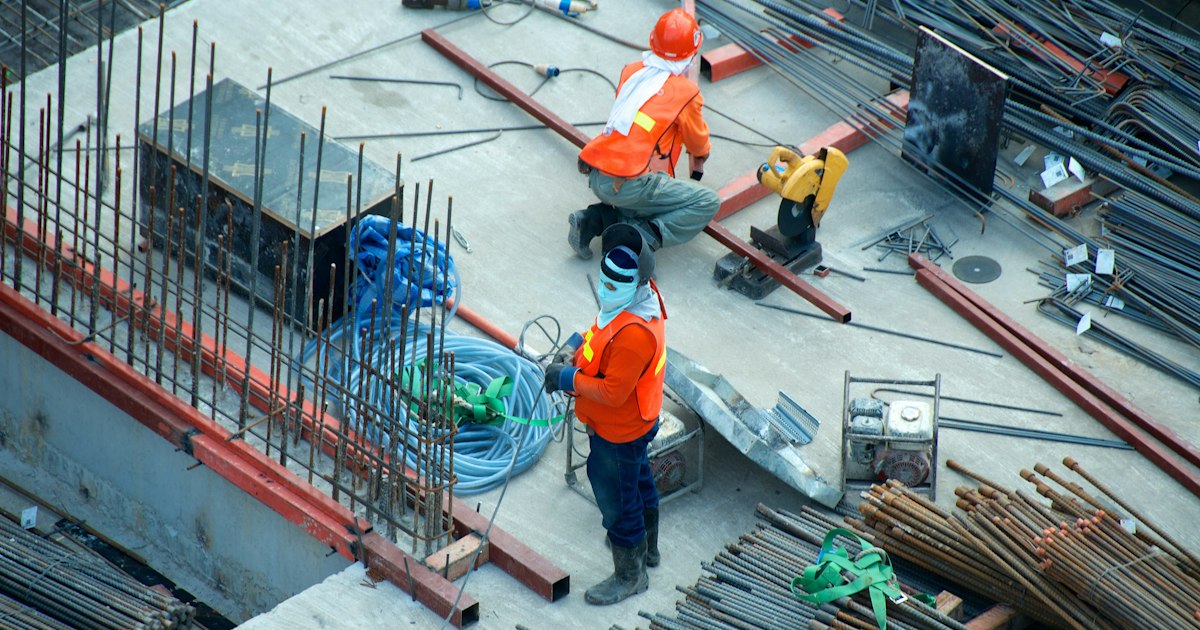

Cleveland is in the middle of a building boom. Cranes stand over the Cuyahoga, crews are racing to close in new downtown towers, lakefront projects, and suburban developments before the first hard freeze, and the pace only sharpens every fall as contractors push to hit year-end deadlines. That urgency keeps schedules on track, but it also puts workers in danger. When crews are rushed, safety shortcuts creep in, and the result is a fall from height, a load that swings loose, a trench that collapses, or a piece of heavy equipment that backs over someone who never saw it coming.
If you were hurt on an Ohio construction site, you may believe workers' compensation is your only option. For many injured workers, that belief quietly costs them the larger part of what they are owed. Ohio law often allows a second, separate claim against companies other than your employer, one that can pay for the pain, the lost future earnings, and the family losses workers' compensation never touches. Here is how it works, and why the clock is already running.
The Scale of Construction Injuries in Ohio
The danger is not abstract. According to the U.S. Bureau of Labor Statistics, Ohio recorded 165 fatal work injuries in 2024, the most recent year of federal data, and construction accounted for 21 of those deaths, roughly 13 percent of the state total. Falls, slips, and trips alone killed 21 Ohio workers that year, and 14 more died after being struck by a falling, flying, or swinging object. Federal safety officials group the most common deadly construction hazards into what they call the Focus Four: falls, struck-by incidents, caught-in or caught-between events, and electrocutions.
For every worker killed, far more survive with injuries that reshape their lives, from crushed limbs and severe burns to spinal cord damage and traumatic brain injuries. Those harms mean surgeries, months away from work, and sometimes a permanent change in what a person can earn. A single bad day on a Cleveland-area site can follow a family for years.
Workers' Compensation Is a Floor, Not a Ceiling
Ohio's workers' compensation system (R.C. Chapter 4123) is a no-fault bargain. You do not have to prove anyone was careless; if you were hurt on the job, the Ohio Bureau of Workers' Compensation pays for your medical treatment and a portion of your lost wages. In exchange, you generally cannot sue your own employer for ordinary negligence. For that reason, comp is often described as the exclusive remedy against the employer.
The trade-off is real, though. Workers' compensation does not pay for your pain and suffering, it does not fully replace your lost income, and it pays nothing for the loss of the life you had before the injury. A claim also must be filed quickly, generally within one year of the date of injury under R.C. 4123.84. Comp is an important safety net, but for a seriously injured worker it is only the beginning of what the law allows.
The Third-Party Claim: Full Recovery Beyond Comp
Here is the piece many injured workers never hear about. A construction site is almost never a single-company operation. A typical project involves a property owner, a general contractor, several subcontractors, equipment lessors, suppliers, delivery drivers, and the makers of the tools and machines on site. If any party other than your employer caused your injury through negligence, you can sue that party for the full measure of your harm, on top of your workers' compensation benefits.
Consider a few situations we see around Cleveland. A subcontractor's crew drops material from an upper floor onto workers below. A general contractor fails to coordinate site safety or hides a known hazard from the trades. A property owner leaves a dangerous condition in place. A scaffold, ladder, or crane fails because it was defectively designed or built, which opens a product liability claim under Ohio law (R.C. 2307.71 and following). A distracted motorist plows into a roadside work zone on Interstate 480. In each case, the at-fault party is someone other than your employer.
Why this matters so much: a third-party claim can recover everything comp leaves on the table, including the full value of your medical bills, complete lost earnings and reduced earning capacity, physical pain and emotional suffering, disfigurement, and loss of consortium for a spouse. For a worker with a brain or spinal injury, the gap between a comp-only recovery and a full third-party recovery can be enormous.

Suing Your Own Employer: The Narrow Intentional-Tort Door
There is one limited path to a claim against your own employer. Under Ohio's employer intentional-tort statute (R.C. 2745.01), you can sue the employer directly, but only when it acted with deliberate intent to cause injury, a standard Ohio courts read very strictly. The statute does create a rebuttable presumption of intent in specific situations, such as the deliberate removal of an equipment safety guard or the deliberate misrepresentation of a toxic substance. These cases are hard to prove, but when the facts are there they are worth pursuing with experienced trial counsel.
Ohio's Frequenter Laws Protect People on the Job
Ohio also has long-standing safety statutes that help injured workers. R.C. 4101.11 and R.C. 4101.12 require employers and property owners to furnish a safe place of employment and to protect frequenters, a category that includes workers lawfully present on a site. When an owner or general contractor creates or tolerates a hazard that injures another company's worker, these frequenter duties can anchor a third-party case.
Deadlines That Can End Your Case Before It Starts
Few things are more painful than a strong claim lost to a missed deadline. Ohio sets different clocks for the different parts of a construction injury case, and they do not wait for you to recover. The timeline below shows the deadlines that matter most.
Just as important, the evidence on a construction site has a short life. Scaffolding comes down, equipment is repaired or returned, the site changes week to week, and crews move on to the next job. The sooner a lawyer can send preservation letters, photograph conditions, and identify every company that was on site, the stronger your case will be.

What to Do After a Cleveland Construction Injury
Get medical care first, even if the injury seems minor, because head, neck, and internal injuries often look small at the scene and turn serious later. Report the injury to your employer and make sure a workers' compensation claim is filed. Then protect the facts: photograph the scene and equipment, note every company and crew on site, and get contact information for any witnesses.
Be careful about recorded statements. Insurers for the other companies may call within days, and their job is to limit what they pay. You are not required to give them a recorded statement, and it is wise to speak with your own lawyer first. Early legal help is less about rushing to court than about getting the site investigated before the trail goes cold. Families who have lost a loved one on a job site should know that Ohio's wrongful death law lets the surviving family pursue the same third-party claims, and that catastrophic head trauma is among the most serious outcomes our brain injury team handles.
Frequently Asked Questions
I am already getting workers' compensation. Can I still sue someone?
Who besides my employer can be held responsible for a construction injury?
What if the accident was partly my own fault?
How long do I have to file after an Ohio construction accident?
Can I ever sue my own employer directly?
Will I owe legal fees up front?
Talk With a Cleveland Construction Accident Lawyer Today
You built this city. If a construction injury has taken your health, your paycheck, or someone you love, you deserve more than the minimum. At Ryan Injury Attorneys, Thomas P. Ryan and our team dig into every layer of a job site to find each company that should answer for what happened, and we pursue the full recovery Ohio law allows. The consultation is free, and you pay nothing unless we win. Call (216) 777-RYAN or contact us to learn your options.
This article is general information about Ohio law, not legal advice, and does not create an attorney-client relationship. Every case turns on its own facts.