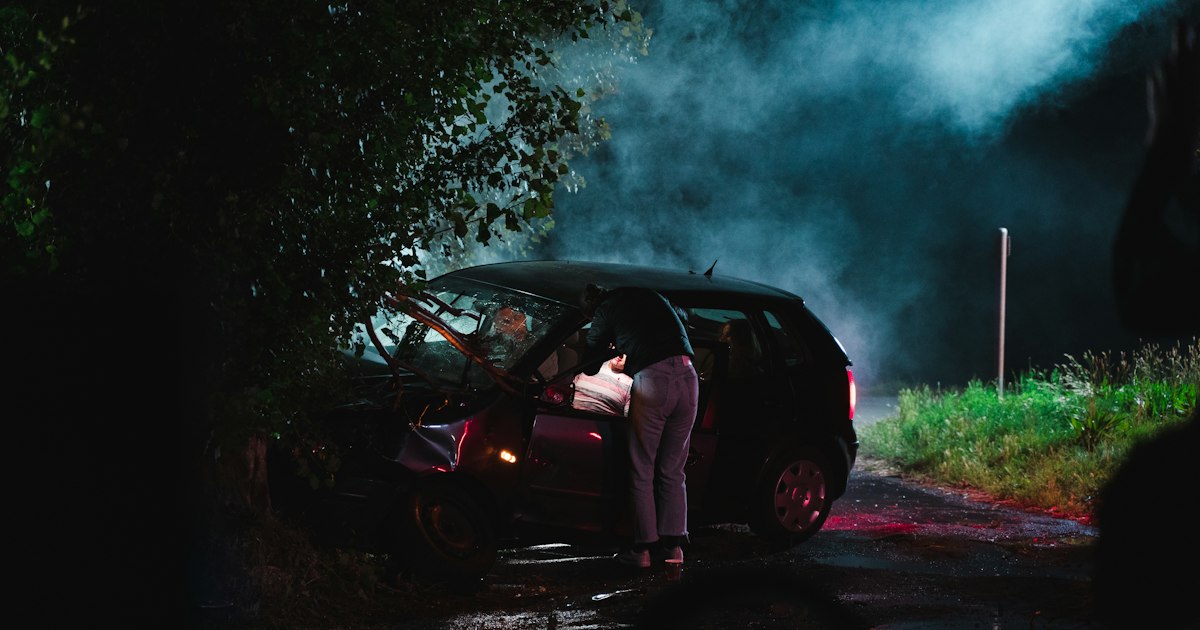

As the clocks fall back and Cleveland's evening commute turns dark long before most people leave the office, the roads from the Shoreway to neighborhood streets in Ohio City, Tremont, and Collinwood grow more dangerous. Drivers see less, react later, and the number of people struck by cars climbs. In a year when traffic deaths across Cleveland have continued to rise, one of the cruelest things that can happen is for the driver who hit you to simply drive away. If you were injured by a driver who fled, you are not without options, and you are not alone. Ohio law gives hit-and-run victims real, practical paths to recovery, even when the other driver is never identified.
What Counts as a Hit-and-Run Under Ohio Law
In Ohio, a hit-and-run is often called a hit-skip. Under R.C. § 4549.02, any driver involved in a crash on a public road that injures a person or damages property has a legal duty to stop, remain at the scene, and share their name, address, and vehicle registration. A driver who leaves without doing so commits a crime, and the penalties grow more serious when someone is hurt or killed. A separate statute, R.C. § 4549.021, covers crashes on private property such as a store parking lot. The duty to stop applies no matter who was involved, whether another motorist, a motorcyclist, a bicyclist, or a pedestrian crossing the street.
It is important to understand that the criminal case against a fleeing driver is separate from your civil claim. Even if prosecutors charge the driver, that case is about punishment, not about paying your medical bills or replacing your lost income. Your right to compensation runs on its own track, and it does not depend on a conviction.
Why You Still Have a Claim When the Driver Disappears
Many Cleveland drivers assume that if the at-fault driver is never caught, there is no one left to hold responsible. That is usually not true. The answer most often lives inside your own auto policy, in a coverage called uninsured motorist (UM) coverage, governed by R.C. § 3937.18. Ohio no longer requires insurers to include UM coverage in every policy, but a great many Ohioans carry it, and for good reason. It is designed to step into the shoes of a driver who has no insurance or who cannot be found.
A hit-and-run driver who is never identified is treated, for insurance purposes, as an uninsured driver. That means your own UM coverage can pay for your injuries, lost wages, and pain, up to your policy limits, as if the fleeing driver's own insurance were paying the claim. This is coverage you already bought and paid premiums for, and after a serious car accident it can be the difference between financial ruin and a fair recovery.
The Phantom Vehicle Rule
Ohio draws an important line for crashes where another vehicle caused the wreck but never physically touched you, sometimes called a phantom vehicle claim. Picture a car that drifts into your lane on the Jennings Freeway, forces you into the guardrail, and then speeds off into the dark. Because there was no contact, R.C. § 3937.18 requires that the facts be corroborated by independent evidence, meaning something more than your own account. A witness who saw the other car, dash-camera footage, or physical evidence at the scene can satisfy that requirement. This single rule is one of the strongest reasons to gather evidence quickly, before it disappears.
Other Ways Victims Get Paid
UM coverage is not the only source of recovery. If police later identify the driver, that person and their insurer can be pursued directly. Medical payments (MedPay) coverage on your own policy can pay early medical bills regardless of who was at fault. Your health insurance may cover treatment as well, often subject to reimbursement later. When a crash involves a commercial truck, a delivery van, or a rideshare vehicle, additional and larger policies may come into play.
What to Do After a Hit-and-Run in Cleveland
The minutes and hours after a hit-and-run are chaotic, but a few clear steps protect both your health and your claim.
First, get yourself to safety and call 911. An official crash report creates a permanent record and starts the police search for the driver. Second, capture everything you can: photos of your vehicle, the roadway, broken glass, skid marks, and any partial plate, color, or make of the fleeing car that you remember. Third, look for witnesses and cameras. Doorbell cameras, gas station footage, business security systems, and city traffic cameras near busy intersections like West 25th Street or Euclid Avenue have helped identify fleeing drivers more than once. Fourth, report the crash to your own insurer promptly and tell them you intend to make an uninsured motorist claim. Finally, get medical attention even if you feel fine in the moment. Adrenaline masks serious injuries, and a gap in treatment can later be used to question how badly you were hurt.
Deadlines That Can Quietly End Your Claim
Ohio law gives you only a limited window to act. Most personal injury claims carry a two-year statute of limitations under R.C. § 2305.10. If a loved one was killed by a fleeing driver, a wrongful death claim under R.C. § 2125.02 generally must be filed within two years of the death. Uninsured motorist claims add a second layer, and it catches many people off guard: because UM coverage arises from your insurance contract, your policy can set its own, often shorter, deadline for giving notice and filing suit. Some policies also require that a hit-skip be reported to the police within a short time, sometimes 24 hours. Missing one of these contractual deadlines can defeat an otherwise strong claim, which is why it is dangerous to wait and see.
Damages You Can Recover
A hit-and-run victim in Ohio can generally recover economic damages such as past and future medical bills, lost income, reduced earning capacity, and property damage, along with noneconomic damages for physical pain, emotional suffering, and the loss of a normal life. In cases involving catastrophic harm, such as a traumatic brain injury or a spinal cord injury, Ohio's statutory caps on noneconomic damages may be lifted entirely, allowing a full recovery for a life that has been permanently changed. Families who lose someone can pursue damages for the loss of their loved one's financial support, companionship, and guidance.
How a Cleveland Hit-and-Run Lawyer Helps
Insurance companies understand that a UM claim comes out of their own pocket, and they do not always make the process easy. An experienced lawyer can move fast to preserve video and physical evidence before it is gone, track down witnesses, document the full scope of your injuries with the right medical experts, and press your insurer to honor the coverage you faithfully paid for. At Ryan Injury Attorneys, our team, led by Thomas P. Ryan, has spent decades holding insurers accountable for Northeast Ohio families.
Frequently Asked Questions
Can I recover money if the hit-and-run driver is never caught in Ohio?
What is uninsured motorist coverage, and do I have it?
Do I have a claim if the other car never actually touched mine?
How long do I have to file a hit-and-run claim in Ohio?
Is leaving the scene of an accident a crime in Ohio?
What does it cost to hire a Cleveland hit-and-run lawyer?
Hurt by a Driver Who Fled? Talk to Us Today.
If you or someone you love was hurt by a driver who fled in Cleveland or anywhere in Northeast Ohio, do not assume the door is closed. Ryan Injury Attorneys offers a free, no-obligation consultation to review your options and every source of insurance coverage available to you. There is no fee unless we win your case.
Call (216) 777-RYAN or contact us online for your free consultation.