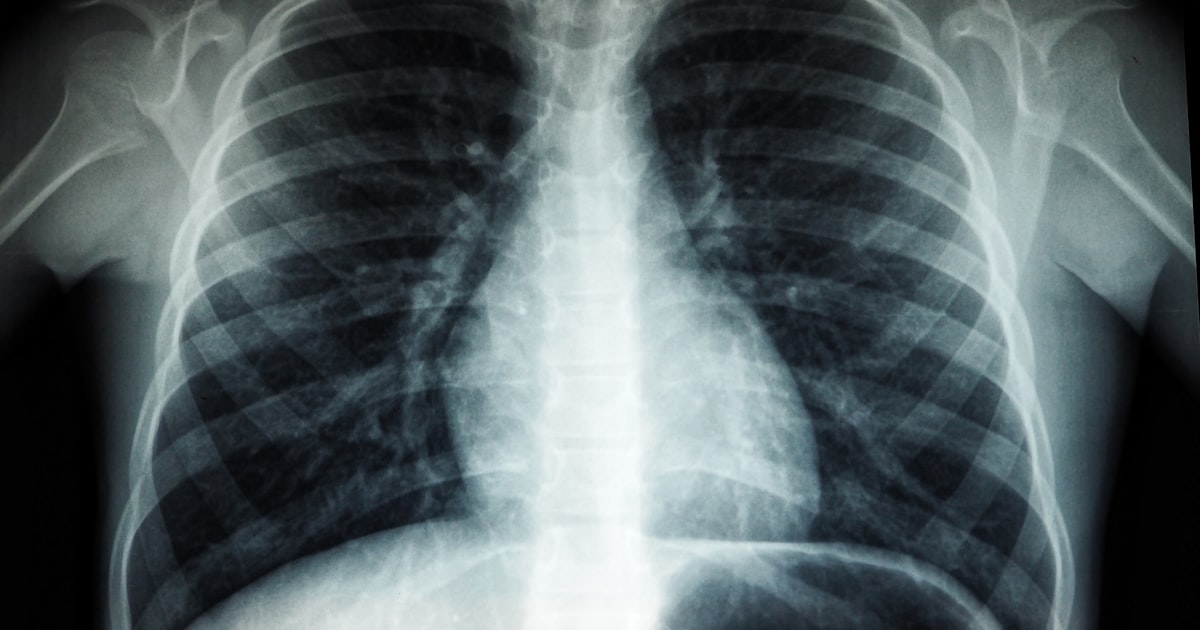

Artificial intelligence is now part of everyday medicine, often without patients ever knowing. When you have a scan read at a Cleveland hospital, an algorithm may flag it first. When you arrive in an emergency department, software may help decide how quickly you are seen. These tools can catch problems early and save lives. They can also fail, and when they do, a patient can be sent home with an undiagnosed cancer, a missed stroke, or a worsening infection that a careful human review would have caught.
The scale of this shift is striking. The U.S. Food and Drug Administration has now authorized more than 1,350 AI-enabled medical devices, including a record 331 in 2025 alone, and roughly three quarters of them are in radiology. As these tools spread through Ohio hospitals and clinics, the legal questions they raise are no longer hypothetical. This guide explains how medical AI causes harm, who can be held responsible, and how Ohio law protects injured patients. It is part of our larger resource on AI injury claims under Ohio law.
How Hospitals Are Using AI Right Now
Medical AI is no longer limited to research labs. Hospitals use it to read X-rays, CT scans, and mammograms, to flag suspected strokes and pulmonary embolisms for urgent attention, to predict sepsis before it becomes deadly, to triage emergency patients, and to suggest diagnoses and treatments. Some tools work in the background to prioritize which scans a radiologist sees first. Others produce a preliminary read that a busy clinician may accept with little independent scrutiny.
Used well, these systems support good doctors. The danger appears when the technology is trusted beyond its proven reliability, when it is deployed on patients it was never validated for, or when it quietly replaces the careful human judgment that medicine still requires. A tool that is right most of the time can still cause devastating harm the times it is wrong.
When Medical AI Causes Harm
The failures we see fall into a few recurring patterns. A false negative occurs when the software misses real disease, such as a tumor on a scan the algorithm marked normal, delaying treatment until the cancer has advanced. A flawed or ignored alert can delay care for a time-critical emergency like a stroke or heart attack, where minutes change outcomes. A triage model can send home a patient who is far sicker than the score suggested. And a system trained on one population can perform poorly on patients who do not match its training data.
These harms are especially cruel because they are often invisible at the time. The patient goes home believing they are fine. By the time the truth emerges, a treatable condition may have become a life-threatening one. That delay, and the difference it made, is the heart of a medical AI injury claim.

Two Claims in One: Malpractice and Product Liability
A single medical AI error can create two distinct legal claims, and strong cases often pursue both. The first is medical malpractice against the providers who used the tool. If a physician, radiologist, or hospital relied on a flawed AI result without the independent judgment the standard of care requires, or ignored a correct AI warning, that can be negligence. The second is product liability against the company that designed, trained, or sold the software, if the tool itself was defective or its limits were not adequately disclosed. The diagram below shows how these two tracks run in parallel toward the same recovery.
The One-Year Deadline and the Affidavit of Merit
Time is the enemy in these cases. In Ohio, a medical claim generally must be filed within one year under R.C. § 2305.113, one of the shortest deadlines in injury law. There are limited extensions, such as a properly served 180-day letter, and tolling for minors or those under a legal disability under R.C. § 2305.16, but no one should assume an exception applies. On top of the deadline, Ohio requires an affidavit of merit from a qualified medical expert to be filed with the complaint under Civil Rule 10(D)(2), meaning a case must be investigated and reviewed by an expert before it is even filed.
Product liability claims against a software maker follow the longer two-year injury deadline under R.C. § 2305.10, and may face a statute of repose. Because these clocks differ and run at the same time, a patient who waits can lose the malpractice claim while the product claim survives, or lose valuable time on both. Our Cleveland medical malpractice lawyers move quickly to preserve every option.

Who May Be Responsible
Responsibility in a medical AI case can be shared across several parties. The treating physician or radiologist may be liable for negligent reliance on or disregard of the tool. The hospital or health system may be liable for how it chose, configured, and supervised the technology, and for the conduct of its employees. A separate radiology or specialty group may carry its own responsibility. And the software developer or device manufacturer may be liable if the product was defective in design, was inadequately tested, or failed to warn users of its real limitations. Sorting out who did what requires both medical and technical expertise.
Automation Bias: When Clinicians Trust the Machine Too Much
One of the most important concepts in these cases is automation bias, the well-documented human tendency to over-trust a computer's output. When an algorithm labels a scan normal, a rushed or overconfident reviewer may accept that conclusion rather than performing the independent analysis the standard of care demands. Automation bias does not excuse a missed diagnosis. If anything, it underscores why hospitals must train staff to treat AI as a tool that assists judgment rather than replaces it. When an institution deploys these systems without that discipline, and a patient is harmed, that failure can be central to the case.
Proving a Medical AI Case
These cases are built on a careful record. We gather the complete medical chart, the imaging and the AI outputs, the software version and settings, the audit logs showing what the system reported and when, the hospital's policies for using the tool, and the documentation the maker submitted to the FDA. We then work with radiologists, treating specialists, and technical experts who can explain what a reasonable provider should have done and where the technology or its use fell short. That evidence can disappear or become harder to obtain over time, which is one more reason to act early.
Real-World Ways These Failures Happen
Consider a few patterns that illustrate the risk. A chest CT is run through an AI triage tool that marks it low priority, so a small but real lung nodule waits weeks for review and grows. A sepsis-prediction model fails to alert on a deteriorating patient whose vital signs did not match its training pattern, and treatment starts too late. A mammography algorithm labels a study normal, and a developing cancer is not caught until the next annual screening. A stroke-detection tool misroutes a scan, and the narrow window for clot-busting treatment closes. None of these require a dramatic malfunction. A quiet, ordinary error in a trusted system is enough to change a life.
How Ohio's Damage Rules Apply
When negligence involving a medical AI tool causes injury, Ohio law allows recovery for economic losses like medical bills and lost income, and for noneconomic losses like pain, suffering, and the loss of a normal life. Ohio's cap on certain noneconomic damages under R.C. § 2315.18 may apply, but the statute contains important exceptions for catastrophic injuries such as permanent and substantial physical deformity or the loss of a bodily organ system. If a diagnostic failure proves fatal, the family may bring a wrongful death claim under R.C. § 2125.02 within two years of the death. A careful lawyer identifies every category of harm so nothing is left on the table.
Why These Cases Are Different From Ordinary Malpractice
A traditional malpractice case asks whether a doctor acted reasonably. A medical AI case adds a second layer: whether the technology worked as promised, whether the hospital deployed it responsibly, and whether anyone was warned about its limits. That means more potential defendants, more technical evidence, and defenses that blend medicine and software. It is exactly the kind of case where a manufacturer argues the doctor was solely at fault while the doctor argues they reasonably trusted an FDA-cleared tool. Cutting through that finger-pointing is where experienced counsel earns its keep.
What to Do If You Suspect a Medical AI Error
If you believe an AI tool contributed to a missed or delayed diagnosis, request complete copies of your medical records and imaging as soon as possible. Write down the timeline of your symptoms, appointments, and what you were told. Do not rely on verbal reassurances that nothing went wrong. Because Ohio's one-year medical deadline is so short and an expert affidavit is required before filing, contact a lawyer promptly so your case can be investigated while the records are complete and the deadlines are still open.
Frequently Asked Questions
Can I sue if a hospital’s AI missed my diagnosis?
How long do I have to file a medical AI claim in Ohio?
Who is responsible when medical AI causes harm?
What is automation bias and why does it matter?
What evidence is needed to prove a medical AI error?
How much does it cost to hire Ryan Injury Attorneys for a medical AI case?
Talk With a Cleveland Medical AI Injury Lawyer
If you or a loved one was harmed by a missed or delayed diagnosis that an AI tool touched, the clock may already be running. Founding attorney Daniel J. Ryan and the team at Ryan Injury Attorneys investigate these cases with respected medical and technical experts. Call (216) 777-RYAN for a free, confidential consultation, or contact us online. There is no fee unless we recover for you.