
As the clocks fall back on Sunday, November 1, 2026, the evening rush hour across Greater Cleveland slides into darkness. For people walking to a bus stop on Euclid Avenue, crossing Detroit Avenue in Lakewood, or heading home after work, that shift is more dangerous than it sounds. The Ohio Department of Transportation calls October the deadliest month of the year for pedestrian crashes, and state data shows that the large majority of fatal pedestrian crashes happen at dawn, dusk, or after dark. When daylight disappears from the commute, drivers simply do not see people on foot in time.
If you or someone you love was hit by a car while walking in Cuyahoga County, you have real rights under Ohio law. This guide explains why this season is so hazardous, who can be held responsible, how Ohio's crosswalk and comparative fault rules work, and the deadlines that can make or break a claim.
Why October and the End of Daylight Saving Time Are So Dangerous for Ohio Pedestrians
Ohio has recorded pedestrian deaths in the triple digits in most recent years. State figures show pedestrian fatalities climbing over the last decade, peaking at 176 in 2021 before easing to 165 in 2022 and about 150 in 2023. Of those deaths, more than one hundred each year happened after dark. Through the first nine months of one recent year, roughly 85 percent of fatal pedestrian crashes statewide occurred at dawn, dusk, or night.
The reason October stands out is a collision of habits and daylight. People in Northeast Ohio keep walking and waiting at transit stops while sunset arrives earlier each day. When daylight saving time ends and the evening commute moves into full darkness, drivers who are tired, distracted, or speeding have even less time to react, and a person in dark clothing can be nearly invisible until a driver is only a few car lengths away.
Lawmakers have taken notice. A bipartisan proposal in the Ohio General Assembly, House Bill 714, was introduced to strengthen protections for people on foot. As introduced, it would raise the penalty for failing to yield to a pedestrian from a minor misdemeanor to a fourth-degree misdemeanor, create penalties for negligent drivers who seriously injure a pedestrian rather than only those who cause a death, and make clear that drivers must yield to anyone lawfully in a crosswalk. The bill remains pending and is not yet law, but it reflects growing concern about safety on Ohio's roads.
Who Is Liable When a Pedestrian Is Struck in Ohio
Driver Negligence and Failure to Yield
Most pedestrian claims turn on driver negligence. A driver has a duty to use reasonable care, to obey traffic signals, to drive at a safe speed for conditions under R.C. 4511.21, and to yield to pedestrians who have the right of way. When a driver runs a red light, turns without looking, drives distracted by a phone, or travels too fast for a dark and rainy evening, that breach of duty can make the driver and the driver's insurer responsible for the resulting harm.
Liability is not always limited to the driver. A defective vehicle part, a poorly designed or badly lit intersection, or an obscured crosswalk can bring in a manufacturer, contractor, or government entity, although claims against public bodies carry their own immunity rules under R.C. Chapter 2744 and much shorter notice deadlines.
When the Pedestrian Shares Some Fault
Insurance companies almost always argue that the pedestrian was partly to blame, perhaps for crossing mid-block or stepping off a curb against a signal. Ohio follows a modified comparative fault rule under R.C. 2315.33. You can still recover compensation as long as your share of the fault is not greater than 50 percent, but your award is reduced by your percentage of fault. If you are found 20 percent at fault, for example, a 100,000 dollar award becomes 80,000 dollars. Because a few percentage points can mean tens of thousands of dollars, how fault is argued and proven matters enormously.
Ohio's Crosswalk and Right-of-Way Laws Explained
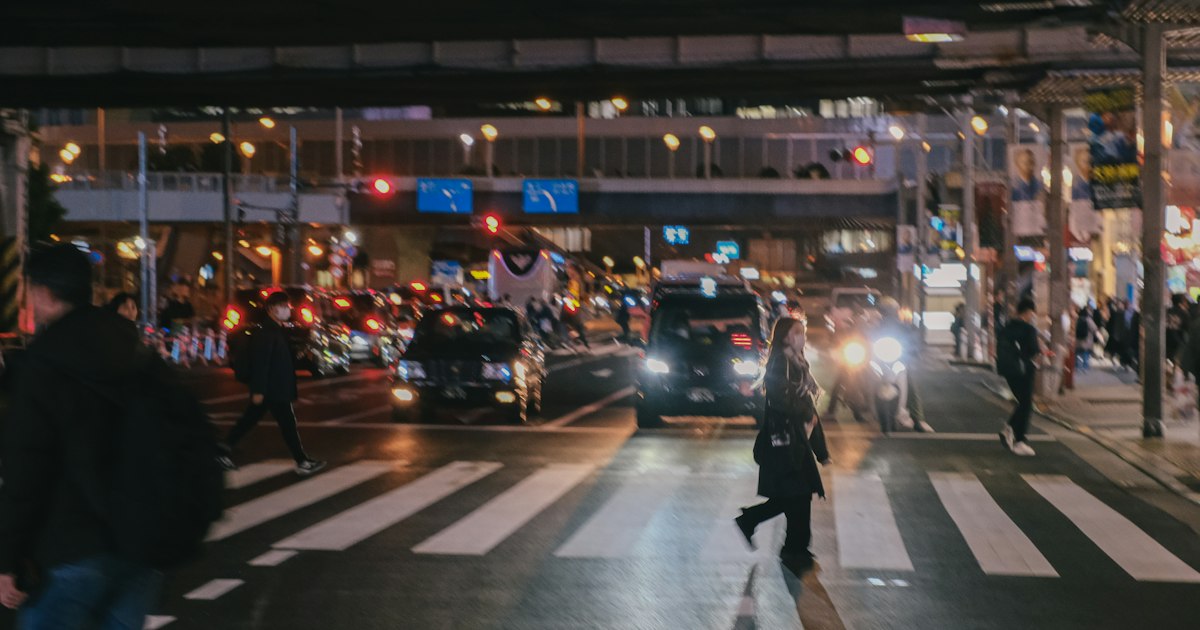
Ohio law gives pedestrians strong protection inside crosswalks. Under R.C. 4511.46, drivers must yield the right of way and slow down or stop for a pedestrian lawfully crossing within a marked crosswalk or an unmarked crosswalk at an intersection. A driver may not pass another vehicle that has stopped to let someone cross.
Outside of a crosswalk, the duties shift. Under R.C. 4511.48, a pedestrian crossing at a point other than a crosswalk must yield to vehicles. Even then, drivers still have a duty to exercise due care and to avoid a crash they could reasonably have prevented. A person stepping off a curb does not lose all protection simply because there were no painted lines, and a driver who is speeding or looking at a phone can still be held accountable.
What to Do After a Pedestrian Crash in Cleveland
The hours and days after a crash shape both your recovery and your claim. If you are able, or if you are helping a loved one, the following steps protect your health and your legal rights.
Get medical attention right away, even if you feel you can walk away, because head injuries, internal bleeding, and spinal injuries are common in pedestrian crashes and are not always obvious at the scene. Make sure the police create a crash report, photograph the roadway, lighting, and signals if you can, and gather witness names before they leave. Above all, speak with a pedestrian accident lawyer before giving a recorded statement to the driver's insurer, since early statements are often used to shift blame onto the injured person.
Deadlines and Damages: What Ohio Law Allows
Ohio generally gives an injured pedestrian two years from the date of the crash to file a personal injury lawsuit under R.C. 2305.10, and a family's wrongful death claim under R.C. 2125.02 generally must be brought within two years of the death. Exceptions are limited. For an injured child, R.C. 2305.16 can pause, or toll, the clock until the child reaches adulthood, and claims against government entities follow much shorter timelines. Waiting too long can permanently end an otherwise strong case.
Ohio law allows an injured pedestrian to seek compensation for past and future medical care, lost wages and earning capacity, out-of-pocket costs, and noneconomic harm such as pain, suffering, and loss of a normal life. When a crash takes a life, families may seek damages for the loss of their loved one's support, companionship, and guidance. While Ohio caps certain noneconomic damages in many injury cases, those caps do not apply in the same way to catastrophic, permanent physical injuries, which are common when a person on foot is struck by a vehicle.
How a Cleveland Pedestrian Accident Lawyer Can Help
Pedestrian cases are rarely simple. They often involve severe injuries, aggressive adjusters, and difficult fights over fault and lighting. At Ryan Injury Attorneys, we investigate quickly while evidence is fresh, obtain crash reports and any available video, consult reconstruction and medical experts, and build a clear picture of what the crash has cost you. Our team has handled serious car accident and pedestrian accident claims throughout Cuyahoga County, and we are prepared to try a case when an insurer refuses to be fair. When a crash takes a life, our wrongful death team helps families pursue accountability.
Frequently Asked Questions
How long do I have to file a pedestrian accident claim in Ohio?
Can I still recover money if I was partly at fault for the crash?
What if I was crossing outside of a crosswalk?
Who pays if the driver who hit me had no insurance or fled the scene?
How much is a pedestrian accident case worth?
Do I really need a lawyer for a pedestrian accident claim?
Talk With a Cleveland Pedestrian Accident Lawyer Today
If you were hit while walking, or you lost a family member in a pedestrian crash, let our team review what happened and explain your options. The consultation is free and confidential, and you owe nothing unless we recover for you. Call Ryan Injury Attorneys at (216) 777-RYAN or reach us through our contact page to speak with attorney Thomas P. Ryan and get the guidance you need before deadlines and insurers close the door.