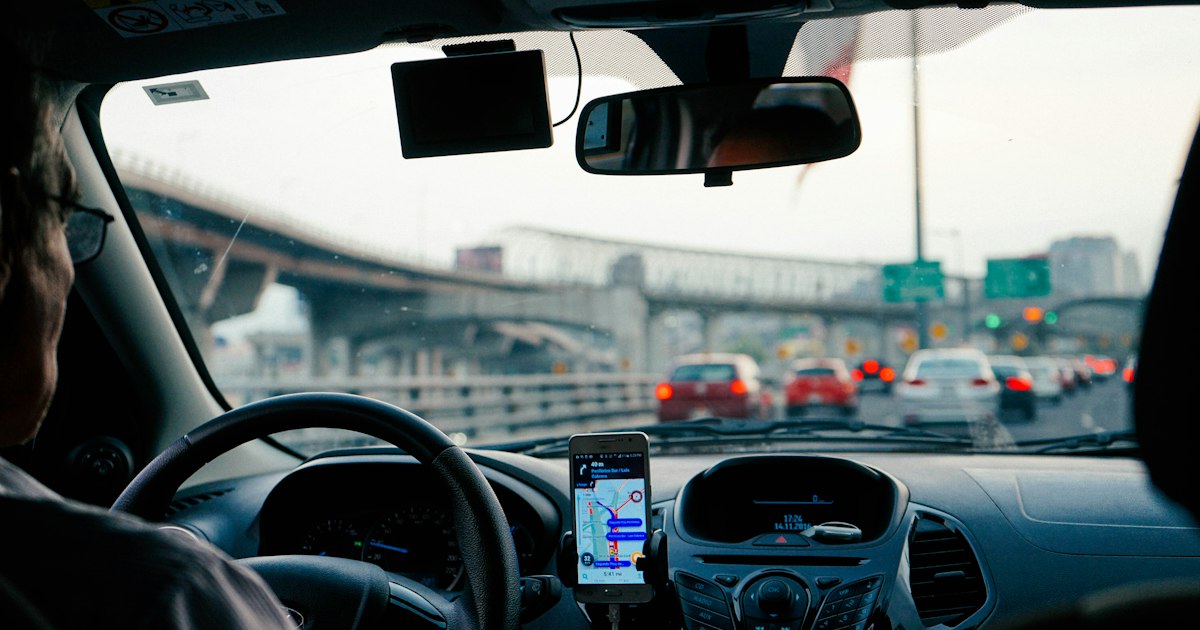

As the days get shorter and the fall commute slips into darkness, Cleveland drivers face an old hazard made worse by low light: the driver in the next lane looking down at a phone instead of the road. Distraction is now one of the deadliest habits on American roads. More than 3,000 people are killed each year in distraction-affected crashes nationwide, according to the National Highway Traffic Safety Administration, and reading a single text takes a driver's eyes off the road for about five seconds, long enough at highway speed to travel the length of a football field blind.
If a distracted driver hurt you, the law is on your side, but winning the case turns on something many people do not expect: proof. Distracted driving happens in an instant and leaves no skid marks, so the hard part is showing that the other driver was looking at a screen. This guide explains how that proof is built and how Ohio's hands-free law helps you recover.
Why Distracted Driving Crashes Stay Dangerous This Fall
Fall driving in Northeast Ohio stacks the odds against an attentive commute. Sunset arrives during rush hour, wet leaves and early frost cut traction, and glare off the lake and wet pavement strains the eyes. A driver who glances at a text in those conditions has even less margin to react. The result shows up on roads like I-90, I-71, I-480, and busy surface routes through University Circle and downtown, where a two-second glance can turn into a rear-end collision, a sideswipe, or a strike on a pedestrian in a crosswalk.
Distraction is not only texting. It includes dialing, scrolling social media, watching video, using a navigation app by hand, and even reaching for a device. Each one pulls a driver's eyes, hands, or attention away from the task of driving, and any of them can support a claim when it causes a crash.

Ohio's Hands-Free Law and What It Means for Your Claim
Ohio strengthened its rules in 2023. Under R.C. 4511.204, effective April 4, 2023, it is now a primary offense to use, hold, or physically support a cell phone or other electronic device while driving. That means an officer can stop a driver for holding a phone alone, without any other violation. Penalties climb with each offense within a two year period, from up to 150 dollars and two license points for a first offense, to up to 250 dollars for a second, to up to 500 dollars, four points, and a possible 90 day license suspension for a third. Fines double in work zones. Narrow exceptions cover hands-free use, reporting an emergency, and use while lawfully stopped or parked.
For an injured person, this law does more than set penalties. Because it imposes a specific safety duty, a driver who violates it has broken a clear legal rule, and that violation can be powerful evidence of negligence in your civil case, sometimes supporting a negligence per se argument. In plain terms, the law helps turn "the other driver was careless" into "the other driver broke a specific rule meant to keep you safe."
How We Prove the Other Driver Was Distracted
Because no one admits to texting after a crash, these cases are built from independent evidence, and no single piece has to carry the whole case. The strongest claims layer several sources together, as the diagram below shows.
Phone and carrier records are often the centerpiece. With the right legal process, we can subpoena call and text logs and app activity that show the device was in use at the moment of impact. The vehicle's event data recorder, the black box, can show speed, braking, and steering in the seconds before the crash, revealing a driver who never slowed because they never saw you. Cameras are everywhere in Cleveland, on dashboards, traffic signals, storefronts, and doorbells, and that footage can capture a head bent toward a lap. Add eyewitness accounts and the responding officer's observations in the crash report, and a clear pattern of distraction emerges.
What a Distracted Driving Crash Can Cost, and What You Can Recover
A moment of inattention can cause a lifetime of harm, from whiplash and broken bones to traumatic brain injury and spinal cord damage. Ohio law lets an injured person recover for medical bills, future care, lost wages and lost earning capacity, and pain and suffering, and families can bring a wrongful death claim when a crash is fatal. Two deadlines matter most: the general two year statute of limitations under R.C. 2305.10, and the two year wrongful death period under R.C. 2125.02.
Be ready for the insurer to argue that you share the blame. Ohio follows comparative negligence under R.C. 2315.33, which lets you recover as long as you were not more than 50 percent at fault, with your award reduced by your share. Companies routinely overstate a victim's role to shrink a payout, which is exactly why hard evidence of the other driver's distraction is so valuable.

Steps to Protect Your Claim After the Crash
What you do in the first hours and days can decide whether the proof survives. If you can, call 911 so the crash is documented, and tell the officer if you saw the other driver on a phone. Photograph the vehicles, the road, and your injuries, and get names and numbers from anyone who saw what happened. Seek medical care promptly, even if you feel only shaken, because a documented evaluation ties your injuries to the crash.
Then move fast on the evidence that fades. Carrier records and black box data are not kept forever, and a vehicle can be repaired or scrapped within weeks. A lawyer can send preservation letters and, when needed, go to court to secure that data before it is gone. Be cautious about giving the other driver's insurer a recorded statement or accepting a quick settlement before anyone understands the full value of your claim.
How a Cleveland Car Accident Lawyer Builds a Distracted Driving Case
These claims reward speed and know-how. An experienced lawyer identifies every source of proof, issues subpoenas and preservation demands before records disappear, and works with crash reconstruction and data-download experts to read the black box. Just as important, the right lawyer values your claim fully, accounting for future medical needs and lost earning capacity rather than the quick number an adjuster offers first.
When injuries are catastrophic or a loved one has died, these cases can involve wrongful death claims and lifelong care, and distracted commercial drivers raise added layers of coverage in Cleveland truck accident cases. Whatever the crash, our firm handles the investigation and the insurers so you can focus on healing. Learn more about our work on Cleveland car accident claims or read about Thomas P. Ryan and his trial experience.
Frequently Asked Questions
How do you prove the other driver was texting or on a phone in Ohio?
What is Ohio’s hands-free law and when did it take effect?
Does a traffic ticket for distracted driving help my injury claim?
How long do I have to file a distracted driving claim in Ohio?
What if I was partly at fault for the crash?
Is it worth hiring a lawyer for a distracted driving crash?
Hurt by a Distracted Driver in Cleveland? Let Us Prove It
The evidence that shows a driver was on a phone, carrier records and black box data, vanishes fast. At Ryan Injury Attorneys, we move quickly to preserve it, prove the distraction, and pursue every dollar you are owed. Your consultation is free, and you owe nothing unless we recover for you.
Call (216) 777-RYAN
Free consultation. Contact us online any time, day or night.