

The Ohio Turnpike runs right across the top of our region, and 2024 was its deadliest year since 1994, with 17 people killed in 16 fatal crashes, according to a WTOL 11 Investigates review of turnpike data. Semis were involved in 10 of those 16 fatal wrecks. Commercial vehicles now make up more than a quarter of turnpike traffic, and commercial volume has climbed sharply as freight moves through northern Ohio toward the holidays.
For drivers in Greater Cleveland, fall and early winter are the hardest months to share the road with an 80,000 pound truck. If you or someone you love has been hurt in a crash with a commercial vehicle, Ohio law and the federal rules that govern trucking give you powerful tools, but only if you act before the evidence is gone. Here is what you need to know.
Why Truck Crashes Climb on Northeast Ohio Freight Corridors in Fall and Winter
Our stretch of Ohio is a freight funnel. Interstate 80 and Interstate 90 carry long haul trucks across the Ohio Turnpike, while I-71, I-77, and I-480 push commercial traffic into and out of the Cleveland area. As the days get shorter, the evening rush now happens in the dark, and the first lake effect snow bands off Lake Erie can turn the pavement near the I-90 split or the Turnpike toll plazas in Lorain County slick with almost no warning.
A fully loaded tractor trailer can need the length of more than a football field to stop on dry pavement, and much more on ice. When a tired or distracted driver is pushing to make a delivery window in those conditions, the result can be a rear end crash, a jackknife, or an underride that leaves catastrophic injuries. Investigators have repeatedly tied fatal turnpike crashes to worn tires and cost cutting on maintenance, which is exactly the kind of corner cutting that gets worse under holiday shipping pressure.
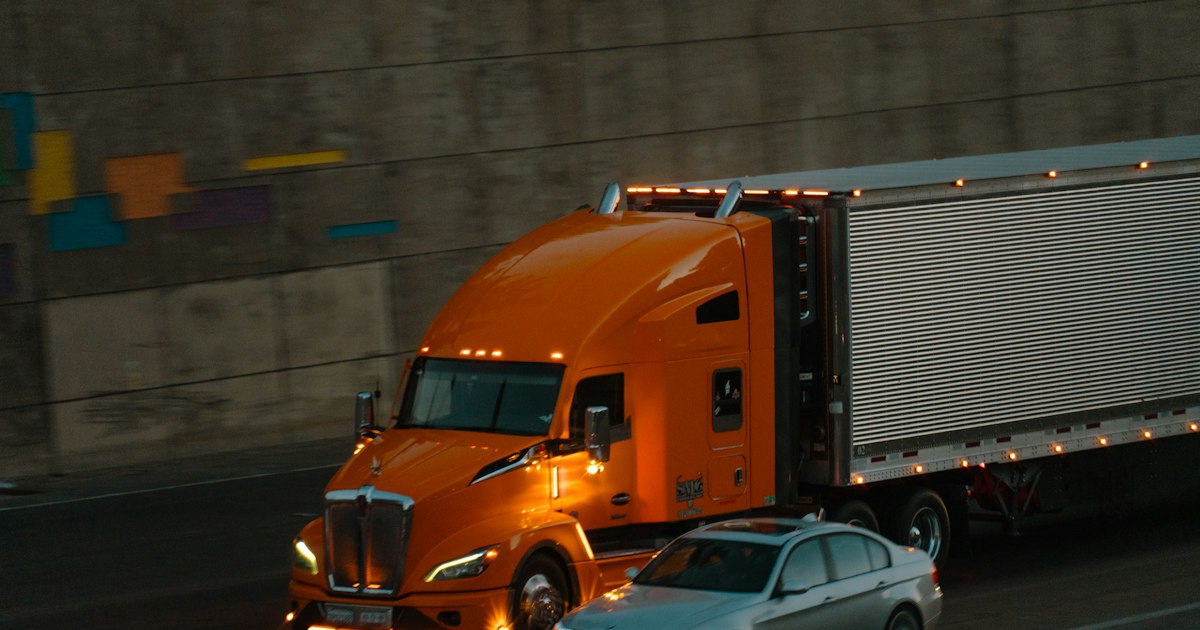
A Truck Accident Claim Is Not Just a Bigger Car Accident Claim
People sometimes assume a truck crash case works like any other Cleveland car accident claim, only with larger numbers. In reality, trucking cases follow a different set of rules, involve different defendants, and turn on evidence that a passenger car crash simply does not generate.
Federal Trucking Rules Add Duties a Normal Driver Never Has
Interstate trucking companies and their drivers must follow the Federal Motor Carrier Safety Regulations. These federal rules set limits on how many hours a driver can be behind the wheel before resting, require electronic logging devices that record duty status, mandate regular vehicle inspections and maintenance, and require pre employment and random drug and alcohol testing. A violation of one of these safety rules can be strong evidence of negligence. When a carrier lets a driver blow past the hours of service limits to hit a holiday deadline, that choice can become the center of your case.
More Than One Company Can Be Held Responsible
In a typical car crash, you deal with one driver and one insurer. A truck crash can involve a web of businesses. The driver may be an employee or an independent owner operator leased to a carrier. The trailer may belong to a different company, the cargo may have been loaded by a third party, and maintenance may have been contracted out. Under theories including respondeat superior, negligent hiring and retention, and negligent entrustment, the motor carrier can be held accountable for putting an unsafe driver or truck on the road. Sorting out who is responsible is important because each company may carry separate insurance, and commercial trucking policies are usually far larger than personal auto policies.
The Evidence That Wins Ohio Truck Cases Disappears Quickly
The single biggest difference between a truck case and a car case is the digital trail. Modern trucks are rolling data recorders. The engine control module, often called the black box, can capture speed, braking, and throttle in the seconds before impact. Electronic logging devices show whether the driver was over hours. Many fleets run forward facing dashcams, and dispatch records and the driver qualification file round out the picture.
The problem is timing. Federal rules let carriers keep some of these records for only a few months, and digital systems can overwrite data in a matter of days or weeks. Once a crash happens, the trucking company and its insurer often send a rapid response team to the scene within hours. You are entitled to the same proof, but it can be erased before you ever file suit unless a lawyer sends a preservation, or spoliation, letter demanding that the company keep it. The chart below shows how short some of these windows are.

Ohio Deadlines and Fault Rules Every Truck Crash Victim Should Know
Two parts of Ohio law shape almost every truck crash claim. The first is the deadline. Under R.C. 2305.10, you generally have two years from the date of the crash to file a personal injury lawsuit. If a loved one did not survive, a wrongful death action under R.C. 2125.02 generally must be brought within two years of the death. When the injured person is a minor, R.C. 2305.16 can pause, or toll, the clock until adulthood. These deadlines are firm, and missing one usually ends the claim no matter how clear the trucking company’s fault was.
The second is how Ohio handles shared fault. Ohio follows modified comparative negligence under R.C. 2315.33. You can recover compensation as long as you were not more than fifty percent responsible for the crash, but your award is reduced by your own percentage of fault. Trucking insurers know this rule well and often try to shift blame onto the injured driver to cut what they pay. That is one more reason the truck’s own data matters so much, because it can show what really happened instead of what the insurer claims. These cases frequently involve serious harm, from a traumatic brain injury to a loss that leads to a wrongful death claim, so the stakes of getting fault right are high.
What to Do After a Truck Crash in the Cleveland Area
In the moments and days after a commercial truck crash, a few steps protect both your health and your claim. Call 911 and get medical care right away, even if you feel alright, because serious injuries like internal bleeding and brain trauma can hide behind adrenaline. If you can do so safely, photograph the trucks, the license plates and USDOT number on the cab, the scene, and the road conditions. Get the names and numbers of witnesses. Do not give a recorded statement to the trucking company’s insurer and do not sign anything before you understand your rights. Then talk to a lawyer quickly, so a preservation letter can go out before the black box and logs are gone.
Ryan Injury Attorneys has spent decades holding trucking companies and their insurers accountable for Cleveland area families. We move fast to lock down the evidence, bring in the right crash reconstruction and medical experts, and build the case for the full compensation you are owed. Learn more about how we handle these cases on our Cleveland truck accident page.
Frequently Asked Questions
How long do I have to file a truck accident lawsuit in Ohio?
Who can be held responsible in a commercial truck crash?
What if the police report suggests I was partly at fault?
What truck evidence matters most, and why the rush?
Should I accept the trucking insurer’s first settlement offer?
What does it cost to hire a Cleveland truck accident lawyer?
Hurt in a Cleveland Truck Crash? Talk With Us Today.
You do not have to face a trucking company and its insurers alone, and you should not wait while the evidence disappears. Ryan Injury Attorneys offers a free, no obligation consultation, and you pay nothing unless we win. Call (216) 777-RYAN or reach us through our contact page to speak with attorney Thomas P. Ryan and our team about your options.