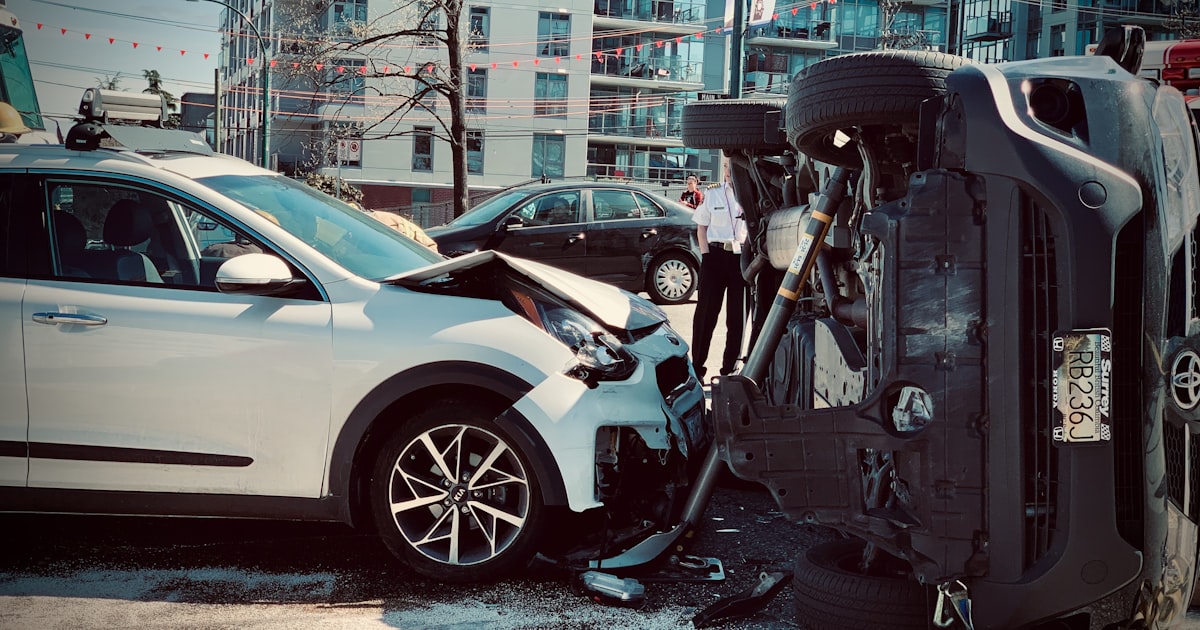

You did everything right. You carried insurance, you stopped at the light on Chester Avenue. Then someone ran it, and now you are looking at a fractured wrist, six weeks off work, and a claim number. When the adjuster finally calls back, you hear the sentence that changes the whole case: the other driver had no coverage at all, or carried the Ohio minimum of $25,000 and your hospital bill already passed that number in the emergency department.
This is not a rare misfortune. Estimates of the uninsured driver rate in Ohio have ranged from roughly one in eight to nearly one in five, depending on the source and the year. Add the drivers who carry only state-minimum limits, and a large share of at-fault drivers on Cleveland roads simply cannot pay for the harm they cause. The good news is that Ohio law gives you a second source of recovery, and it is sitting in your own insurance policy.
What UM and UIM Coverage Actually Are
Uninsured motorist (UM) and underinsured motorist (UIM) coverage are governed by R.C. § 3937.18. Despite where the money comes from, these are not first-party benefits like medical payments coverage. They step into the shoes of the driver who hurt you. Your insurer pays what the at-fault driver should have paid, and you must still prove that the other driver was negligent and that the negligence caused your injuries.
The distinction between the two is simple:
- UM applies when the at-fault driver had no liability policy, when the policy was void or denied, or when the driver fled and was never identified.
- UIM applies when the at-fault driver had insurance, but not enough. If a driver with $25,000 in limits causes $180,000 in medical bills and lost wages, UIM covers the shortfall up to your own limits.
Ohio does not require you to buy UM/UIM. It is optional, and it is one of the first things people decline to shave a few dollars off a premium. That is usually a mistake. For a modest annual cost, UM/UIM protects you against the one risk you cannot control: the financial condition of the stranger in the next lane.

The Cleveland Reality: Where These Crashes Happen
UM and UIM claims cluster in predictable places. The I-90 and I-71 interchange, the Shoreway, the surface streets feeding University Circle, and the corridors along Broadway and Harvard carry heavy traffic and a meaningful number of drivers operating without valid coverage. Hit-and-run crashes in particular concentrate late at night and on weekends, and a fleeing driver is treated under most Ohio policies as an uninsured motorist.
If you are taken to MetroHealth, University Hospitals, or the Cleveland Clinic after a serious crash, the bills mount fast. One night in a trauma unit, imaging, an orthopedic consult, and surgery can exceed a minimum-limits policy before you have started physical therapy. That gap is exactly what UIM exists to fill.
How the Claim Moves, Step by Step
The sequence matters more in a UM/UIM case than in almost any other kind of injury claim. Doing the right things in the wrong order can quietly destroy your recovery.
1. Report the crash immediately
Call the police from the scene and get the report number. In a hit-and-run, prompt reporting is not just good practice, it is often a policy condition. Many carriers require notice to law enforcement within a short window and independent corroboration that another vehicle was involved. A police report generated hours or days later invites a fight you do not need.
2. Put your own insurer on notice
Notify your carrier that a UM or UIM claim may be coming, even before you know the other driver’s limits. Notice provisions are contract terms, and late notice is a defense insurers raise routinely.
3. Never sign a release without written consent
This is where good cases go to die. Nearly every Ohio auto policy contains a consent-to-settle clause. Before you accept the at-fault driver’s policy limits and sign a release, you must give your own insurer written notice and an opportunity to protect its subrogation rights. Settle first, ask later, and your carrier may deny the UIM claim entirely, and it will often be within its rights to do so.
4. Track both deadlines
Under R.C. § 2305.10, the negligence claim against the at-fault driver generally must be filed within two years of the crash. The UM/UIM claim against your own insurer is a breach-of-contract claim, and the deadline is typically set by the policy itself. Many Ohio policies require suit within three years. If the injured person is a minor, R.C. § 2305.16 may toll the negligence deadline, but it does not necessarily extend a contractual limitation period, so do not assume you have extra time.
Where Insurers Push Back
A UM/UIM claim puts you in an adversarial posture with your own insurance company, which surprises almost everyone. You have paid premiums for years and you expect a partner. What you get is a claims professional whose job is to value your case conservatively. The most common friction points:
- Setoff arguments. Your UIM recovery is generally reduced by what you collected from the at-fault driver. The math and the policy language on how that setoff is calculated deserve close attention.
- Anti-stacking clauses. If your household has multiple vehicles or multiple policies, the insurer will usually argue that coverage cannot be combined. Whether that argument holds depends on the specific language and the facts.
- Causation disputes. Expect an argument that your herniated disc predated the collision.
- Comparative fault. Ohio follows modified comparative negligence. If you are found more than 50 percent at fault, you recover nothing, so insurers have an incentive to push fault onto you.

A Word About Government Vehicles and Public Transit
If the vehicle that hit you belongs to a city, a county, RTA, or a school district, a different framework applies. R.C. Chapter 2744 grants political subdivisions broad immunity with narrow exceptions, and the deadlines can be shorter and far less forgiving. If a public vehicle was involved, talk to a lawyer within days, not months.
Practical Steps to Take This Week
- Pull your declarations page. Look for the UM/UIM line. If it is blank or rejected, call your agent and ask what it would cost to add meaningful limits.
- Match your UM/UIM limits to your liability limits. There is little logic in insuring the world for $500,000 while insuring yourself for $25,000.
- Get medical care and keep going. Gaps in treatment are the single most reliable way an insurer discounts a claim.
- Do not give a recorded statement to any carrier, including your own, before you understand how UM/UIM works in your policy.
Related reading from our practice: Cleveland car accident lawyers, Cleveland pedestrian accident lawyers, and Cleveland brain injury lawyers. Our video library covers common Ohio injury questions.
Frequently Asked Questions
Is uninsured motorist coverage required in Ohio?
What is the difference between UM and UIM coverage?
Will my rates go up if I file a UM/UIM claim?
How long do I have to bring a UM/UIM claim in Ohio?
Do I have to tell my insurer before I settle with the other driver?
Can I stack coverage from more than one policy?
Talk to a Cleveland Lawyer Who Has Fought These Claims
A UM/UIM case is a fight with an insurance company that already has your money and your loyalty. It should not also have the advantage of your inexperience. Thomas P. Ryan, Esq. and the team at Ryan Injury Attorneys have spent decades reading Ohio auto policies, finding coverage other people miss, and holding carriers to what they promised.
The consultation is free, and you owe nothing unless we recover for you. Call (216) 777-RYAN or contact us to talk through your policy and your options.